



Commemorating Experience
When John Arnold began his career in London in 1762, only a handful of leading watchmakers including George Graham, Thomas Mudge and John Harrison used pierced rubies to reduce friction at the pivots of the final wheels of the gear train and the balance. Long a closely guarded secret among English master watchmakers, John Arnold also employed this savoir-faire in jewels in the escapements of his marine chronometers and deck watches.
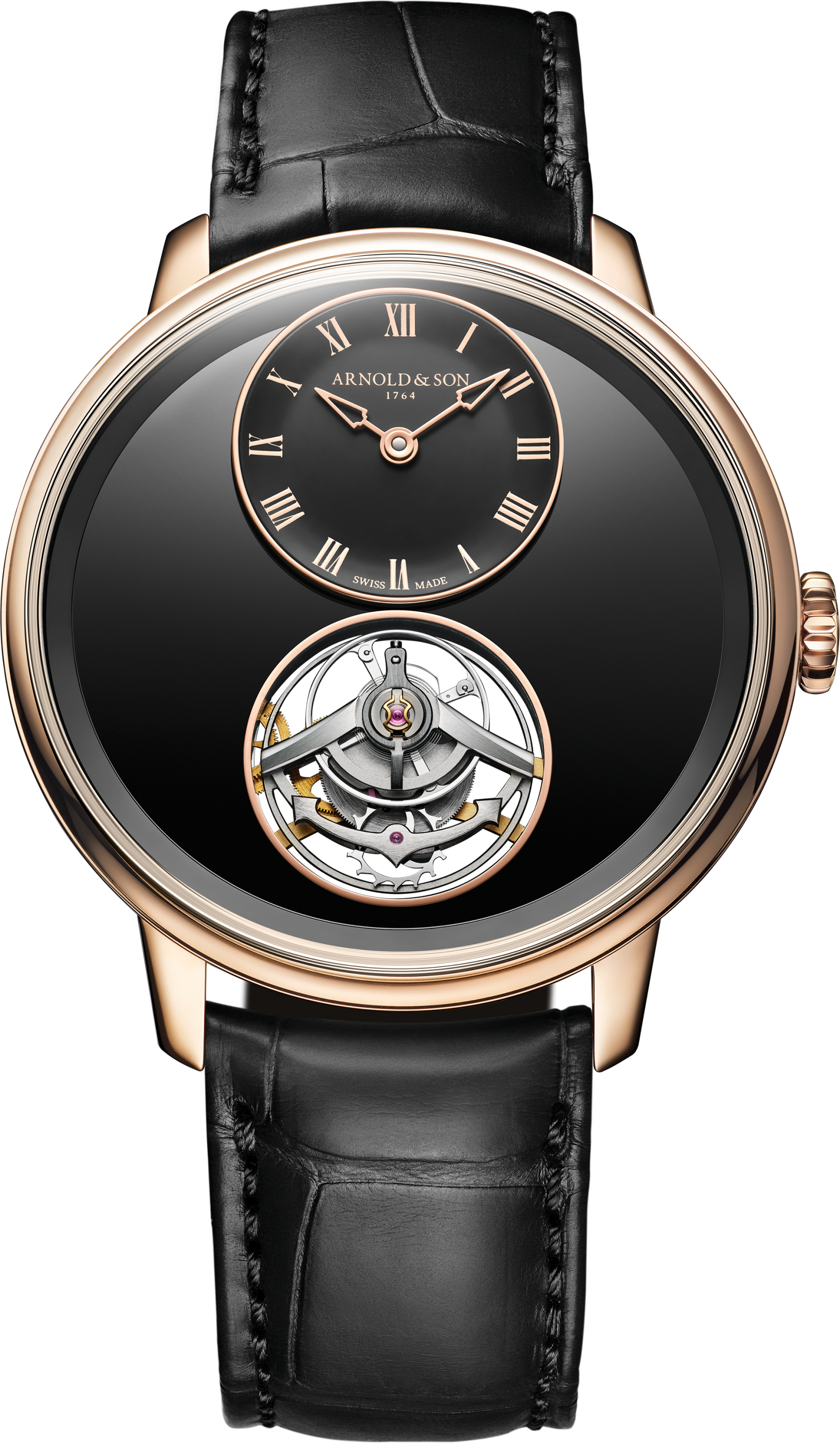
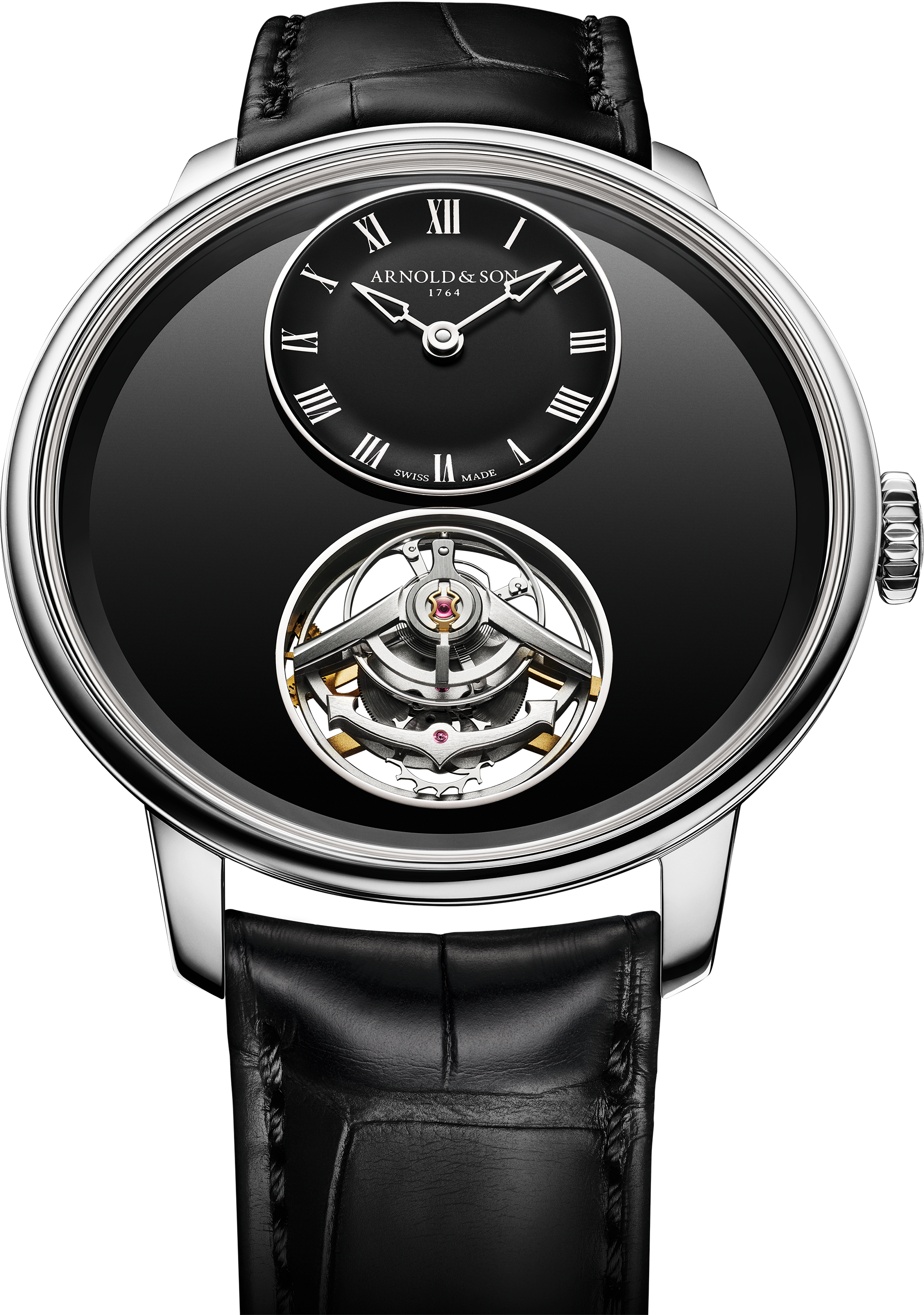
Invested in the working of ornamental stones since its founding, Arnold & Son continues this tradition today by adorning select creations with fine and precious stones. For this edition of the Ultrathin Tourbillon Onyx, the Maison has chosen a 41.5 mm case with softly rounded contours, available in 18-carat 5N red gold or 950 platinum. It is framed by a slim bezel and fitted with a sapphire crystal, revealing a generously proportioned main dial.
Technical Specifications
Functions
Movement
- Calibre:
- A&S8300 (view calibre)
- Jewels:
- 29
- Diameter:
- 32.00 mm
- Thickness:
- 2.97 mm
- Power reserve:
- 100 hours
- Frequency:
- 3 Hz / 21,600 vph
Dial
Subdial
Case
- Material:
- platinum (950)
- Diameter:
- 41.5 mm
- Thickness:
- 8.40 mm
- Crystal:
- domed sapphire with an anti-reflective coating on both sides
- Back:
- sapphire crystal, with an anti-reflecting coating
- Water resistance:
- 3 bar (30 metres/100 feet)
Strap
- Material:
- black alligator leather with black alligator leather lining
- Buckle:
- hand-stitched folding, titanium with platinum (950) cover
Interested in this watch?

Shades of black
The main part of the dial is fashioned from a finely polished disc of genuine onyx. A variety of agate from the large chalcedony family, this stone is defined by its dark, intense and enigmatic hue. It was selected for its aura of mysterious elegance, which emphasises the refined character of the Ultrathin Tourbillon. The concave hours-and- minutes sub-dial is also crafted from black onyx. True to its reputation for inventive use of fine stones, Arnold & Son breaks new ground here, exploring previously uncharted territory: for the first time in watchmaking, onyx is given a matt satin finish. Bold and complex in its execution, this treatment reveals a subtle interplay of materials and reaffirms the Maison’s expertise in the art of working with stone, pushing the boundaries of traditional mineral dial design.

A tale worth spinning
The large, delicate and elegant cage of the flying tourbillon tells a story through symbols. The stylised sextant evokes John Arnold’s pivotal role in advancing the calculation of longitude with his marine chronometers. And the anchor-shaped counterweight – whose central tip serves as a reference for reading the seconds as the cage completes its one- minute rotation – recalls the iconic designs of the renowned English watchmaker.

The magic of contrast
Onyx has been associated with inner strength, courage and self- mastery since antiquity. Greek and Roman civilisations considered it a talisman, believing in its protective powers. Valued over the centuries, onyx has been widely used in jewellery, seals and ceremonial objects, where it has long symbolised power, authority and discernment. Rich in symbolism, it reveals its full magic here, showcasing the hand-bevelled cage of the flying tourbillon through a wide circular aperture at 6 o’clock in the thin stone disc.

A heart of gold
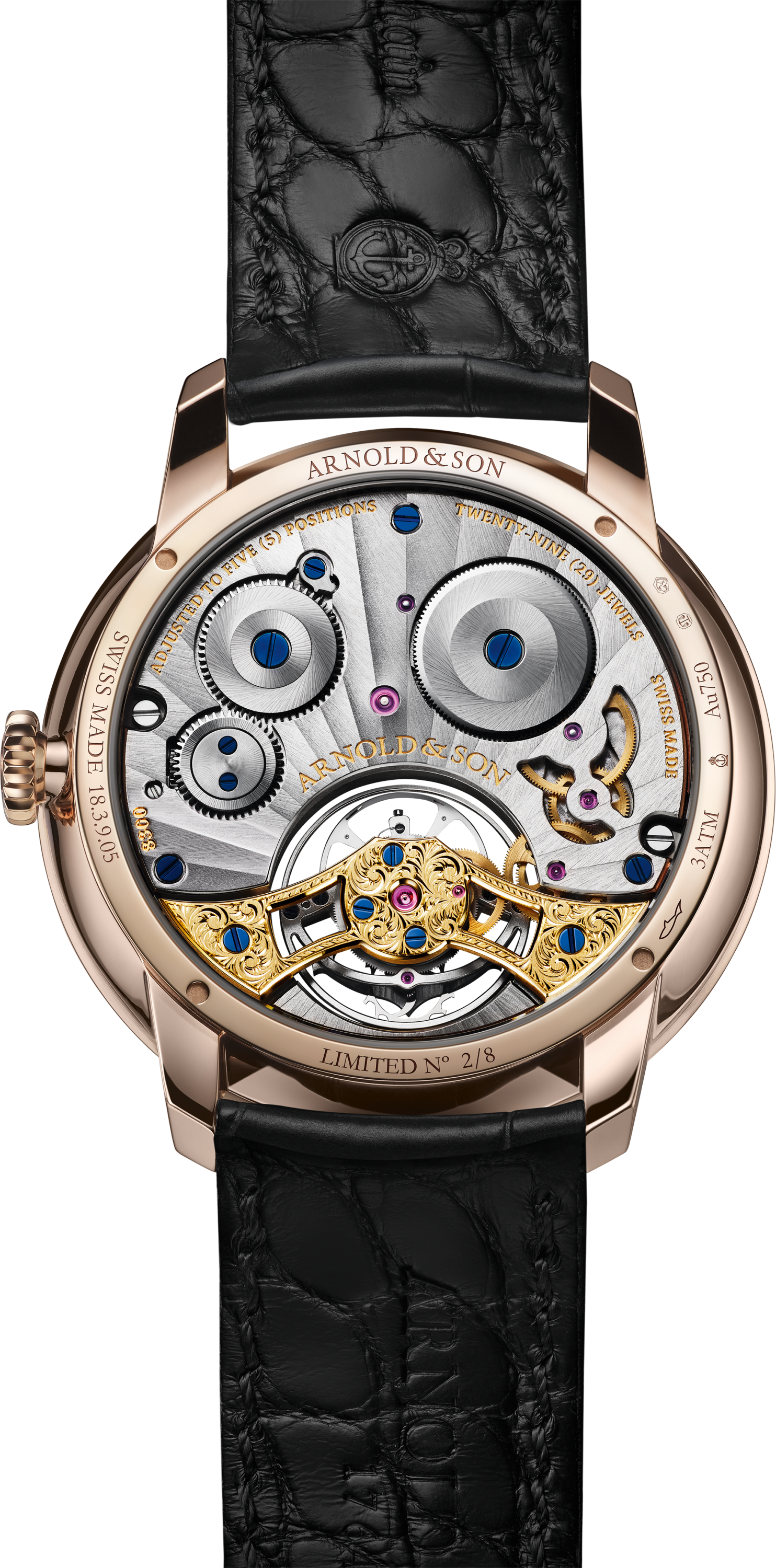
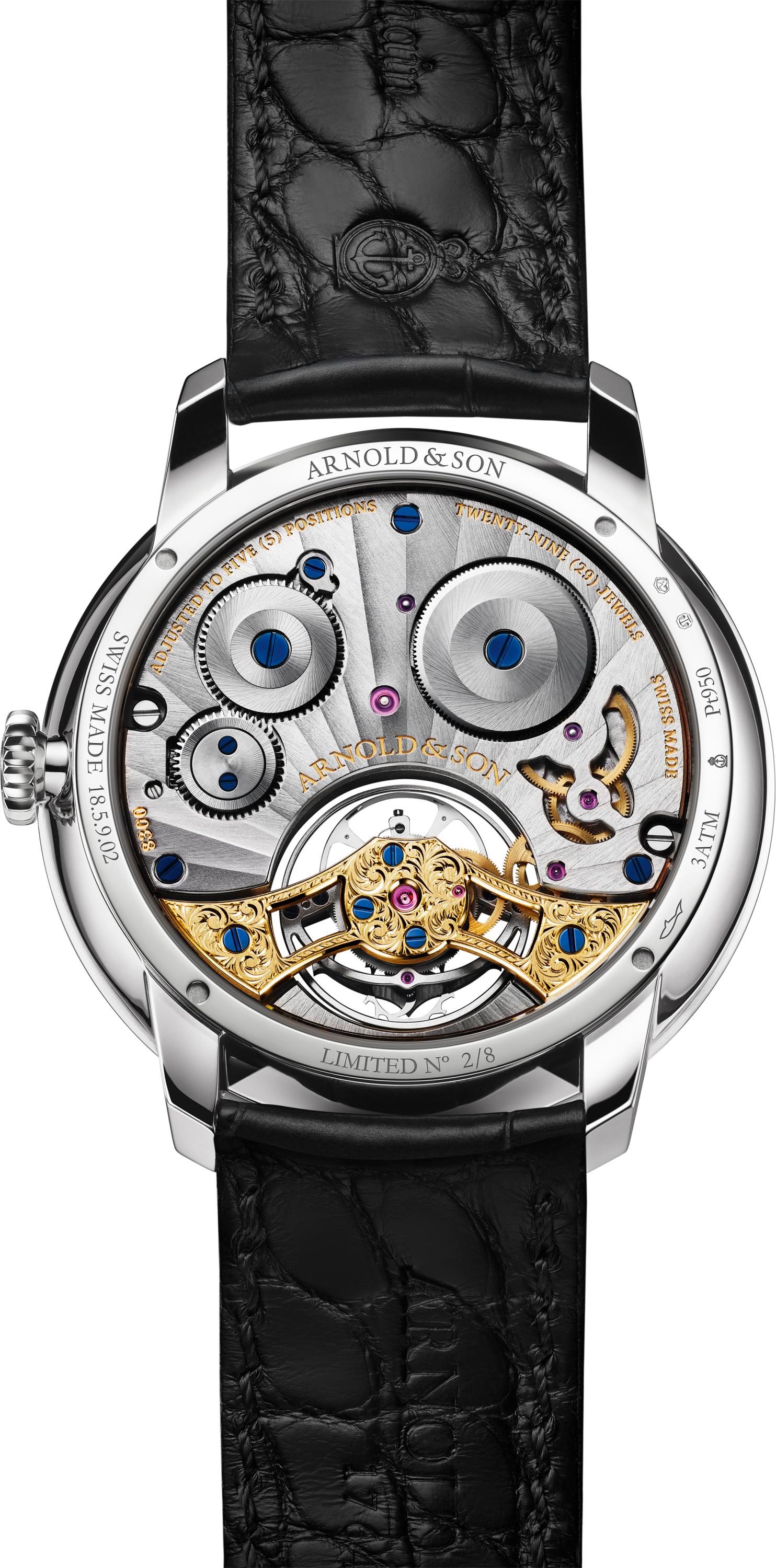
A truly refined movement was required to bring the Ultrathin Tourbillon Onyx – presented in 950 platinum – to life. At just 2.97 mm thick, the in-house A&S8300 manual-winding calibre is among the thinnest available today and fully meets the demands of this haute horlogerie timepiece. Visible through the sapphire crystal case back, the movement reveals its full sophistication. Its 32 mm diameter showcases exemplary finishing: radiating Côtes de Genève, chamfering, snailing on the two-barrel ratchet wheels, and polished, blued and chamfered screws. The flying tourbillon bridge is crafted in 3N yellow gold and hand-engraved with plant motifs inspired by those that adorned the balance cocks of John Arnold’s pocket watches.
Always moving forward
The back of the Ultrathin Tourbillon reveals a rear tourbillon bridge in 3N yellow gold that matches the gear train and stands out from the appearance of the rest of the calibre. Modifications to the tourbillon carriage and regulating organ have increased the power reserve of the A&S8300 calibre, which lasts at least 100 hours. This long power reserve meets the performance standards of Arnold & Son calibres.