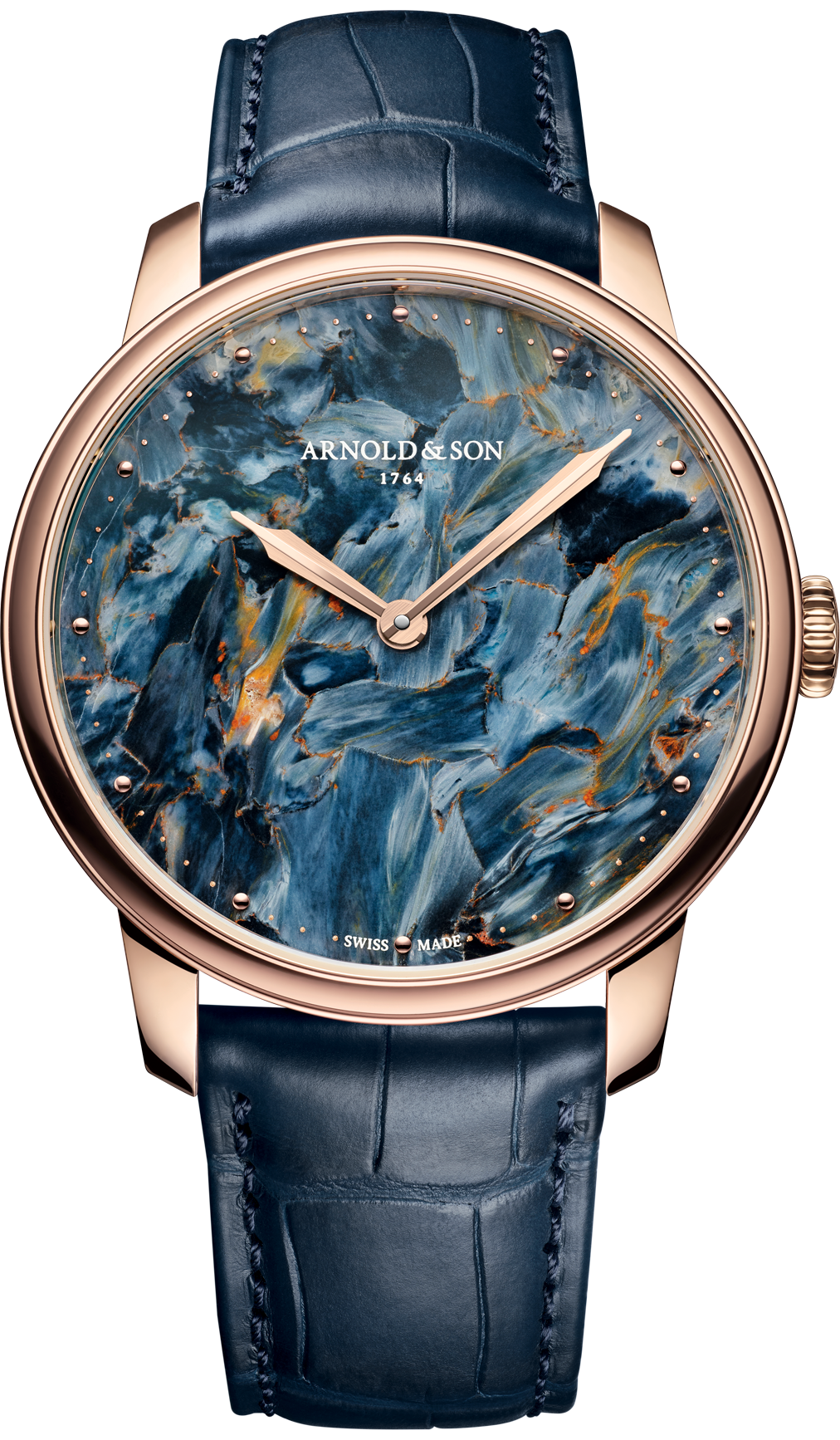




The stone of storms
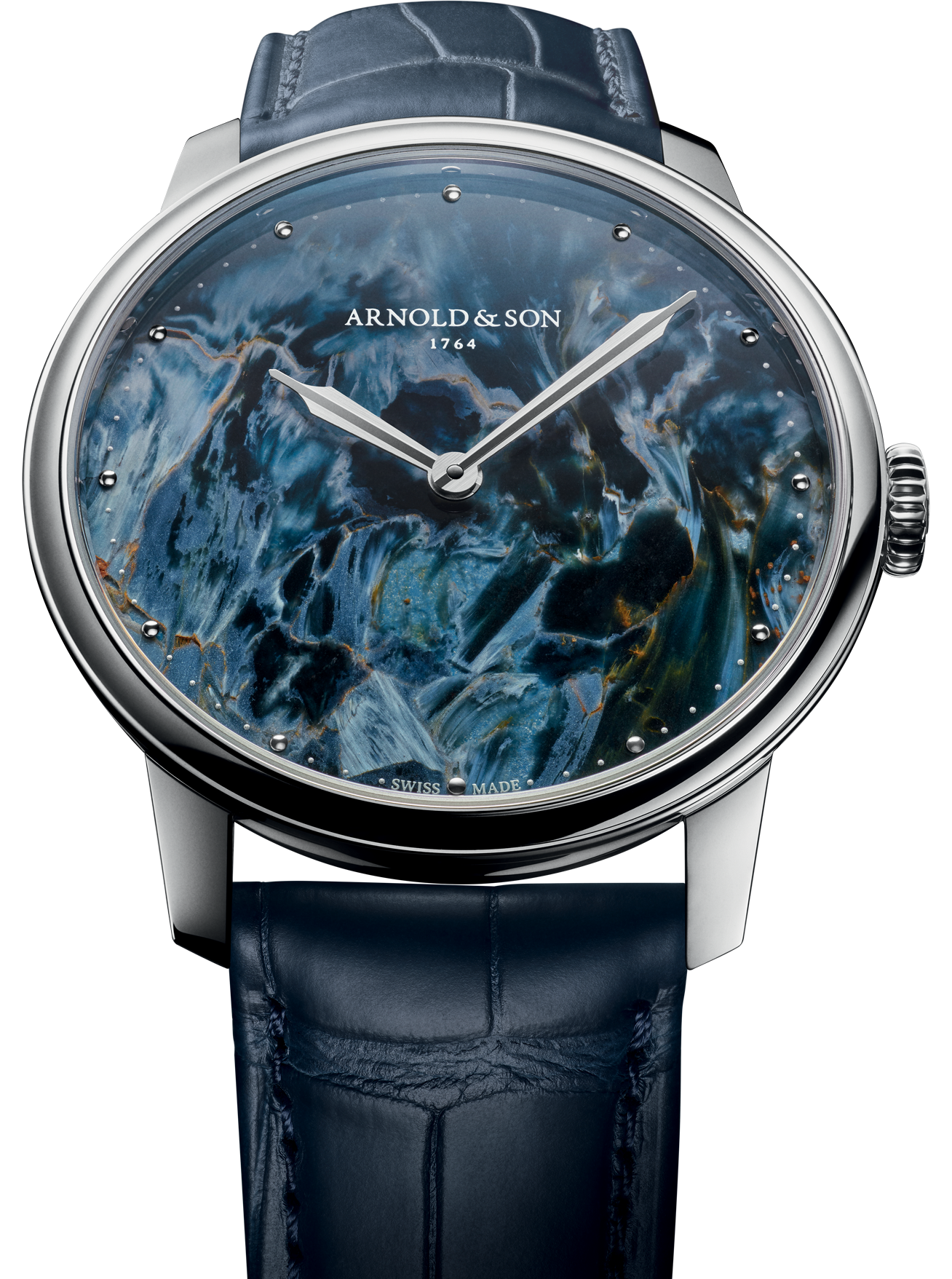
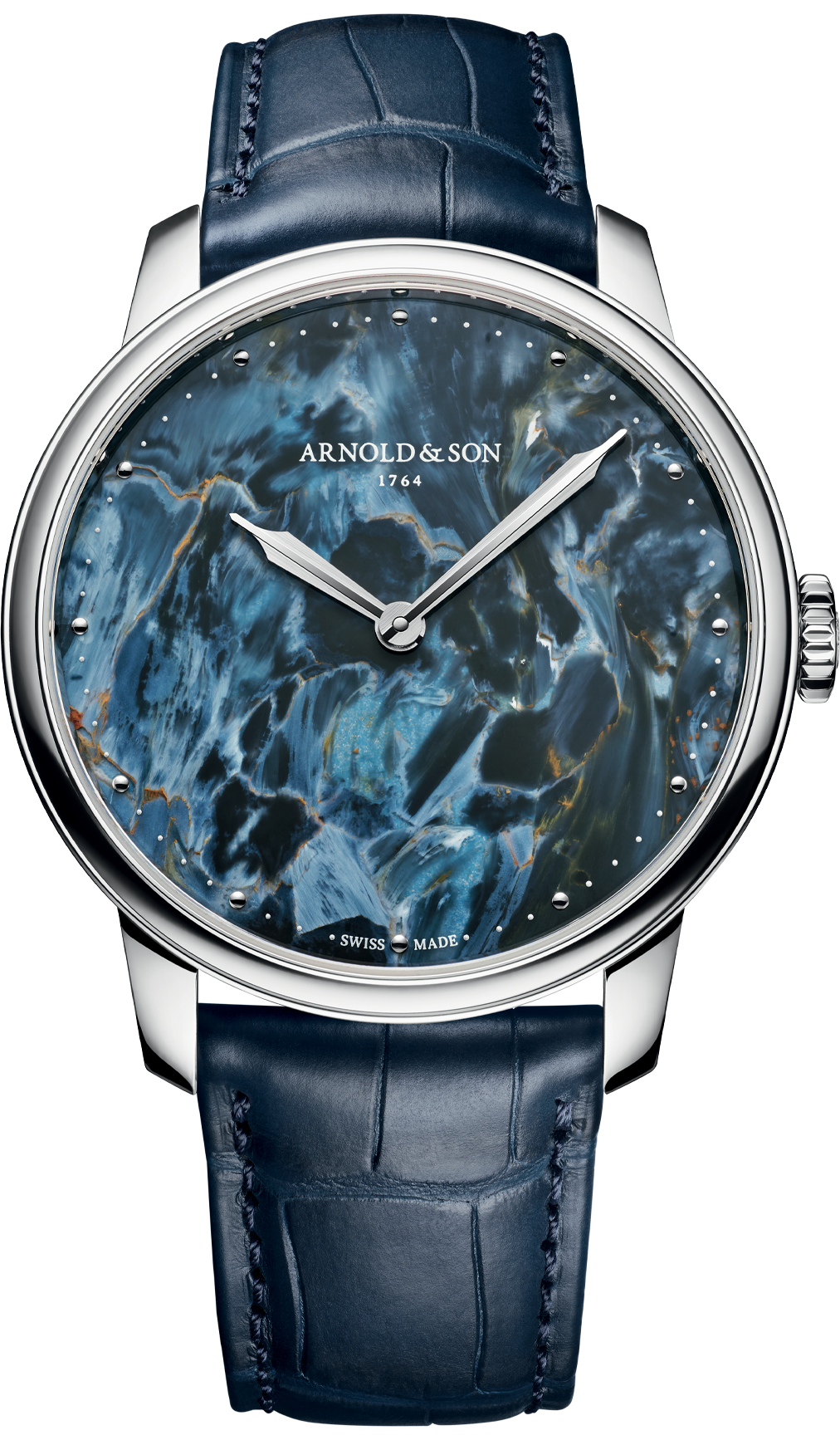
This decorative mineral, sometimes called the ‘stone of storms’, is a variety of chalcedony. It was discovered by Sid Pieters in Namibia at the beginning of the 1960s. It was selected by Arnold & Son for its delicate, swirling, random patterns that recall the skies of Cornwall during rough weather and the foaming waves that lash the rugged coasts of the county.
Technical Specifications
Functions
Movement
- Calibre:
- A&S1001 (view calibre)
- Jewels:
- 21
- Diameter:
- 30 mm
- Thickness:
- 2.70 mm
- Power reserve:
- 90 hours
- Frequency:
- 3 Hz / 21,600 vph
Dial
Case
- Material:
- stainless steel
- Diameter:
- 39.5 mm
- Thickness:
- 7.82 mm
- Crystal:
- domed sapphire, with an anti-reflective coating on both sides
- Back:
- sapphire crystal, with an anti-reflecting coating
- Water resistance:
- 3 bar (30 metres/100 feet)
Strap
- Material:
- ink blue alligator leather
- Buckle:
- pin buckle, stainless steel
Interested in this watch?
Gallery

The history
In 1714, the British Parliament responded to the challenges of the ocean by offering a £20,000 reward to anyone who could determine longitude at sea. While John Harrison (1693–1776) was the first to demonstrate that a timekeeper could solve this challenge, it was John Arnold and his precise, serially produced marine chronometers who enabled England, from the second half of the Age of Enlightenment, to embark on the exploration of new lands before any other nation.

The name
For this ultra-thin watch, Arnold & Son deliberately chose the designation HM to indicate that it displays only hours and minutes. It is inspired by the names of Royal Navy vessels where HM stands for His or Her Majesty’s (depending on the reigning monarch), reflecting the ships’ official status and royal authority. Appearing in the 17th century and formalised as HMS (His/Her Majesty’s Ship) at the end of the 18th century, here this historical reference is elegantly transposed to watchmaking – but that’s another story…

An ultra-thin calibre
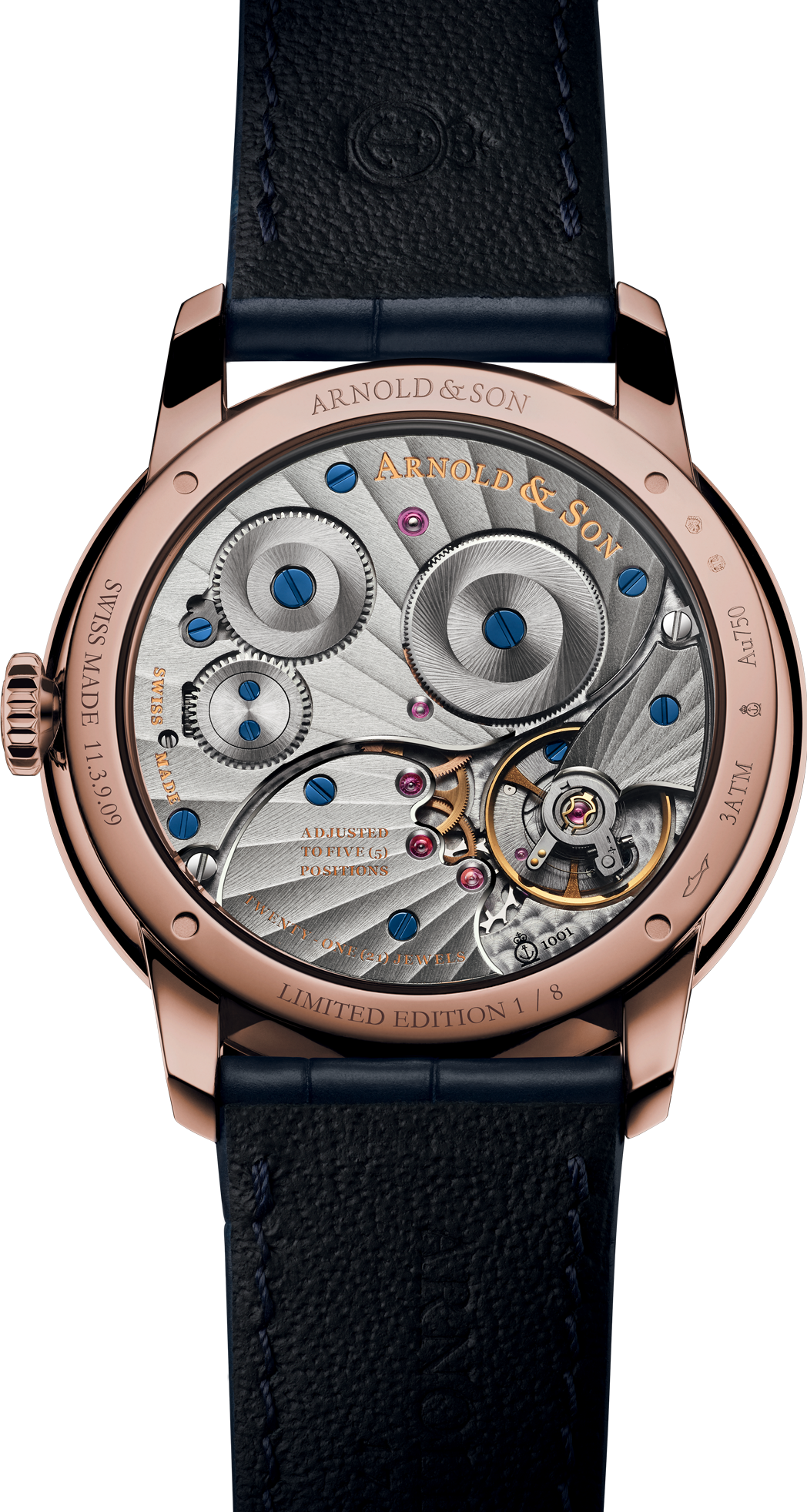
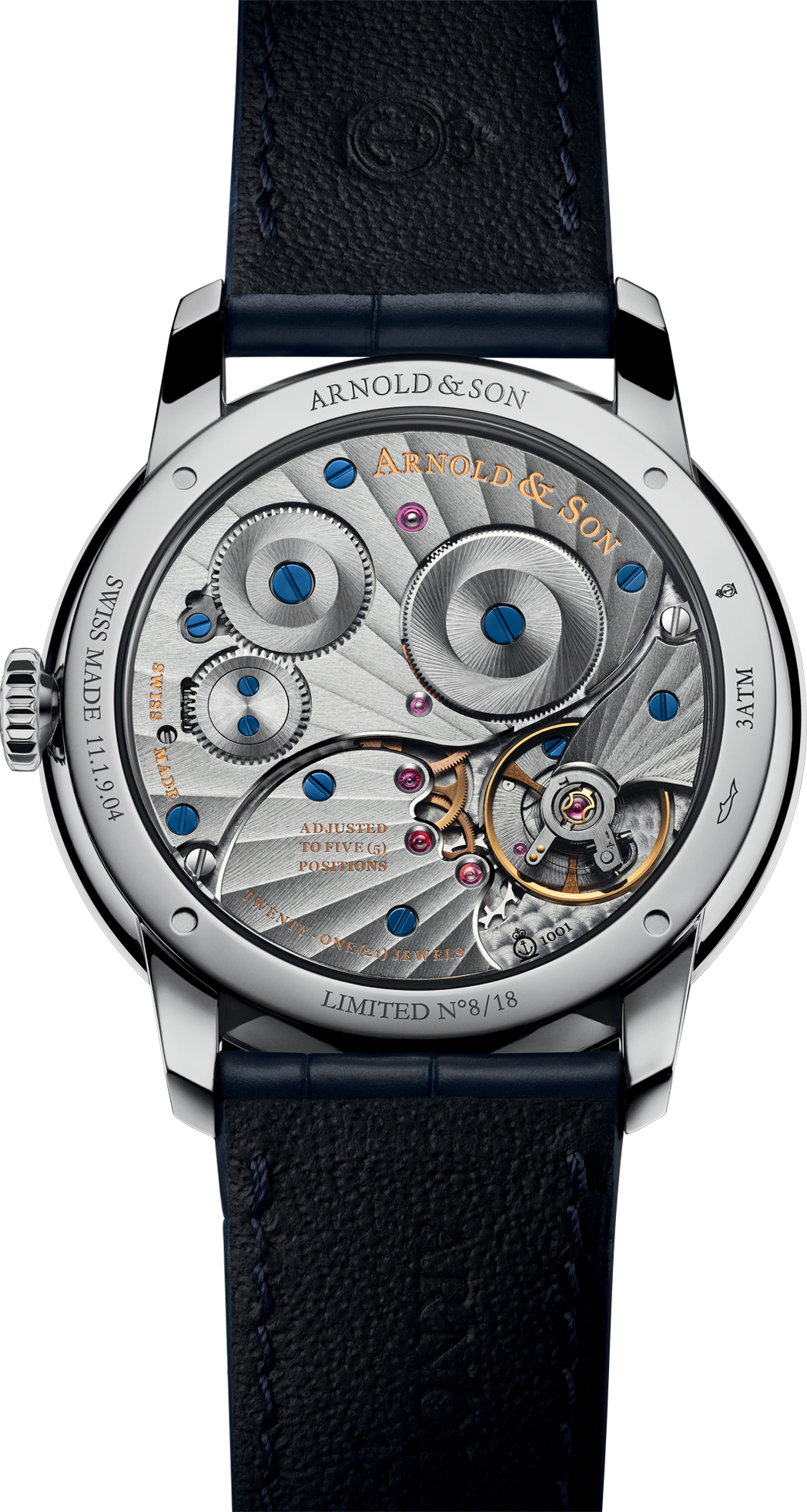
Part of the family of dress watches, the Arnold & Son HM is driven by an in-house manual winding calibre bearing the reference A&S1001. Visible through the transparent case back, this ultra-thin movement, carefully finished according to the most exacting standards of luxury watchmaking, measures 30 mm in diameter and is only 2.70 mm thick. Its rhodium-plated main plate features a circular-grained finish. The bridges are chamfered with a radiating Côtes de Genève decoration. The wheels are snail-finished and the screws, chamfered with polished heads, are blued.
This prestigious movement, equipped with a regulating organ oscillating at 21,600 vibrations per hour (3 Hz), offers a generous 90-hour power reserve once the barrel has been fully wound via the winding crown.