



precision on demand
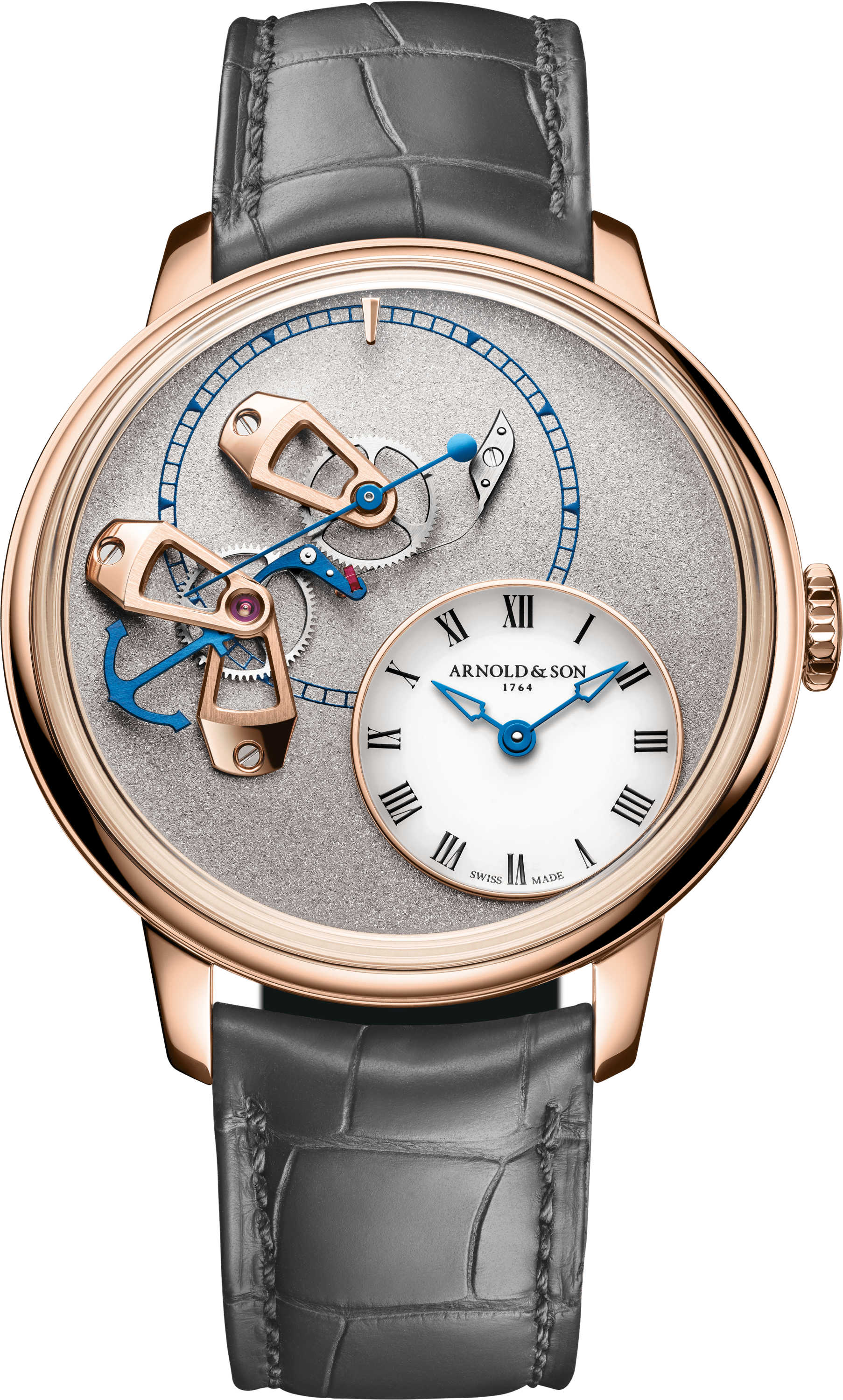
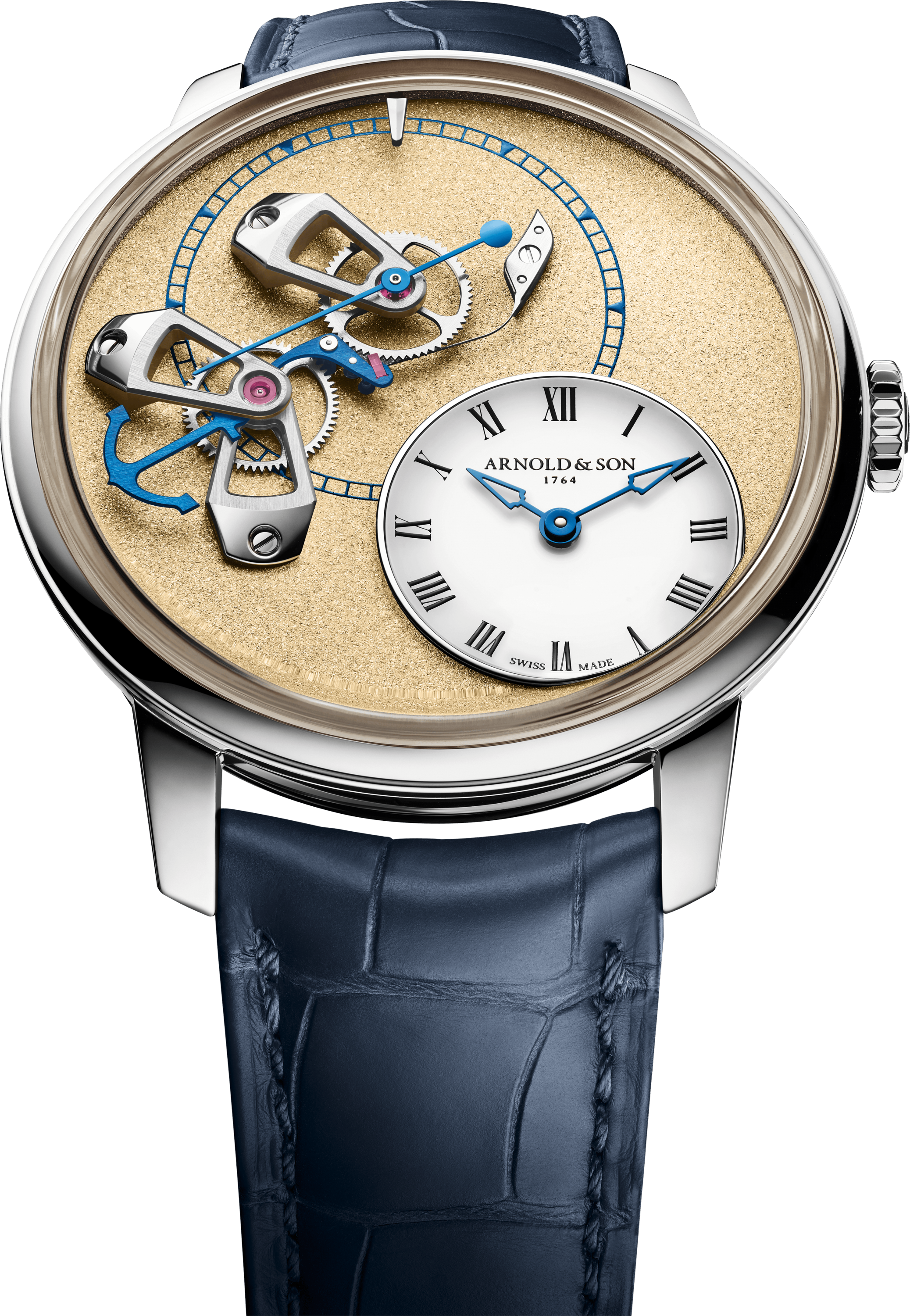
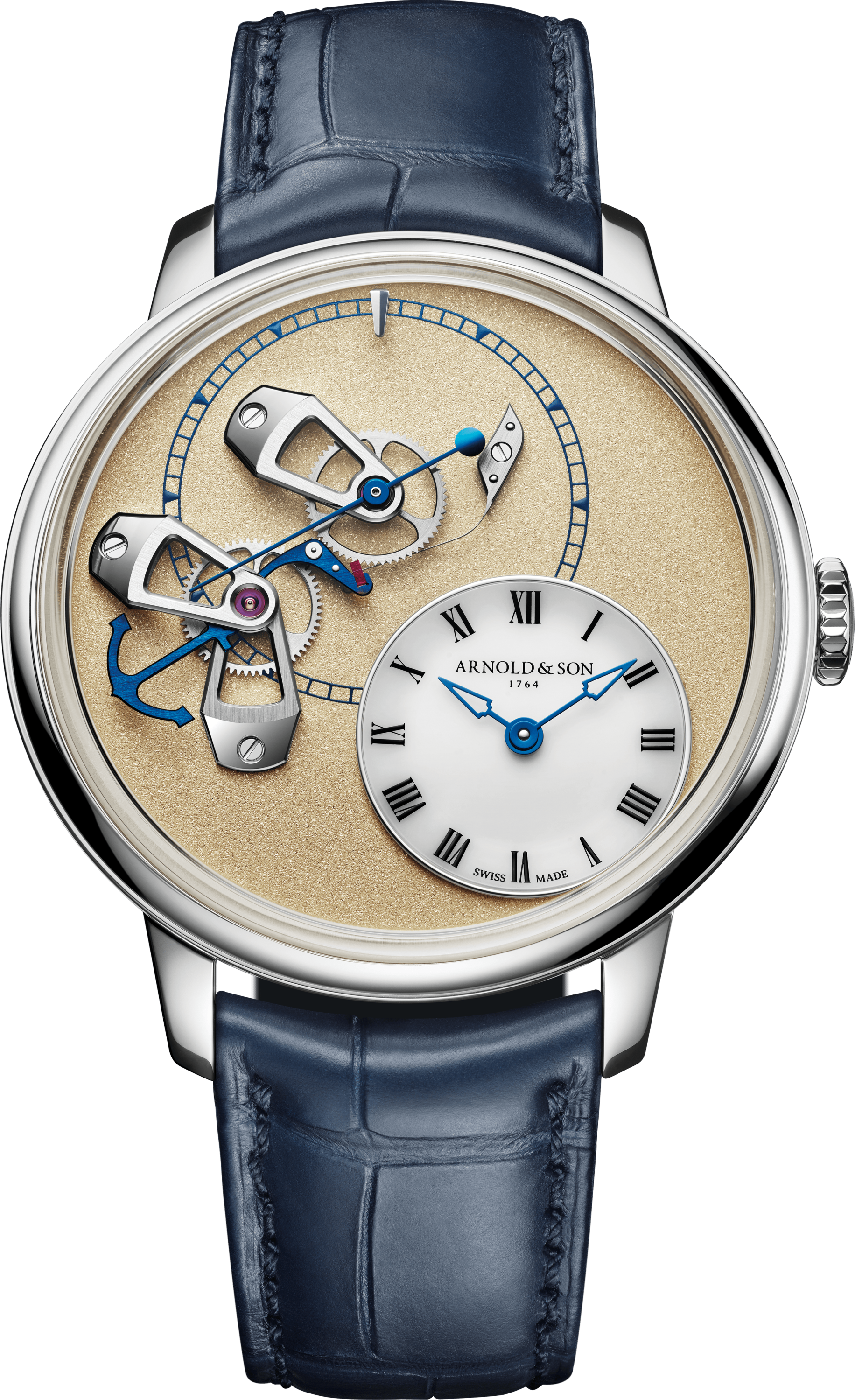
The DSTB collection is distinguished by the precision with which the seconds can be read, as on a marine chronometer, thanks to the rare true-seconds complication. Its sophisticated mechanism is visible on the dial. The limited edition of the DSTB Stop-Seconds also feature an additional function closely associated with chronometry: the stop-seconds function. Activated by pulling out the winding crown, this function stops the seconds hand, allowing the time to be set to the exact second, as was once the practice with chronometers carried aboard ocean-going vessels.
Technical Specifications
Functions
Movement
- Calibre:
- A&S6303 (view calibre)
- Jewels:
- 32
- Diameter:
- 36.2 mm
- Thickness:
- 5.54 mm
- Power reserve:
- 55 hours
- Frequency:
- 4 Hz / 28,800 vph
Dial
Subdial
Case
- Material:
- 950 platinum
- Diameter:
- 42 mm
- Thickness:
- 12.95 mm
- Crystal:
- domed sapphire with a double-sided anti-reflective coating
- Back:
- sapphire with an anti-reflective coating
- Water resistance:
- 3 bar (30 metres/100 feet)
Strap
- Material:
- ink blue alligator leather, hand-stitched
- Buckle:
- pin buckle, 950 platinum
Interested in this watch?
Gallery
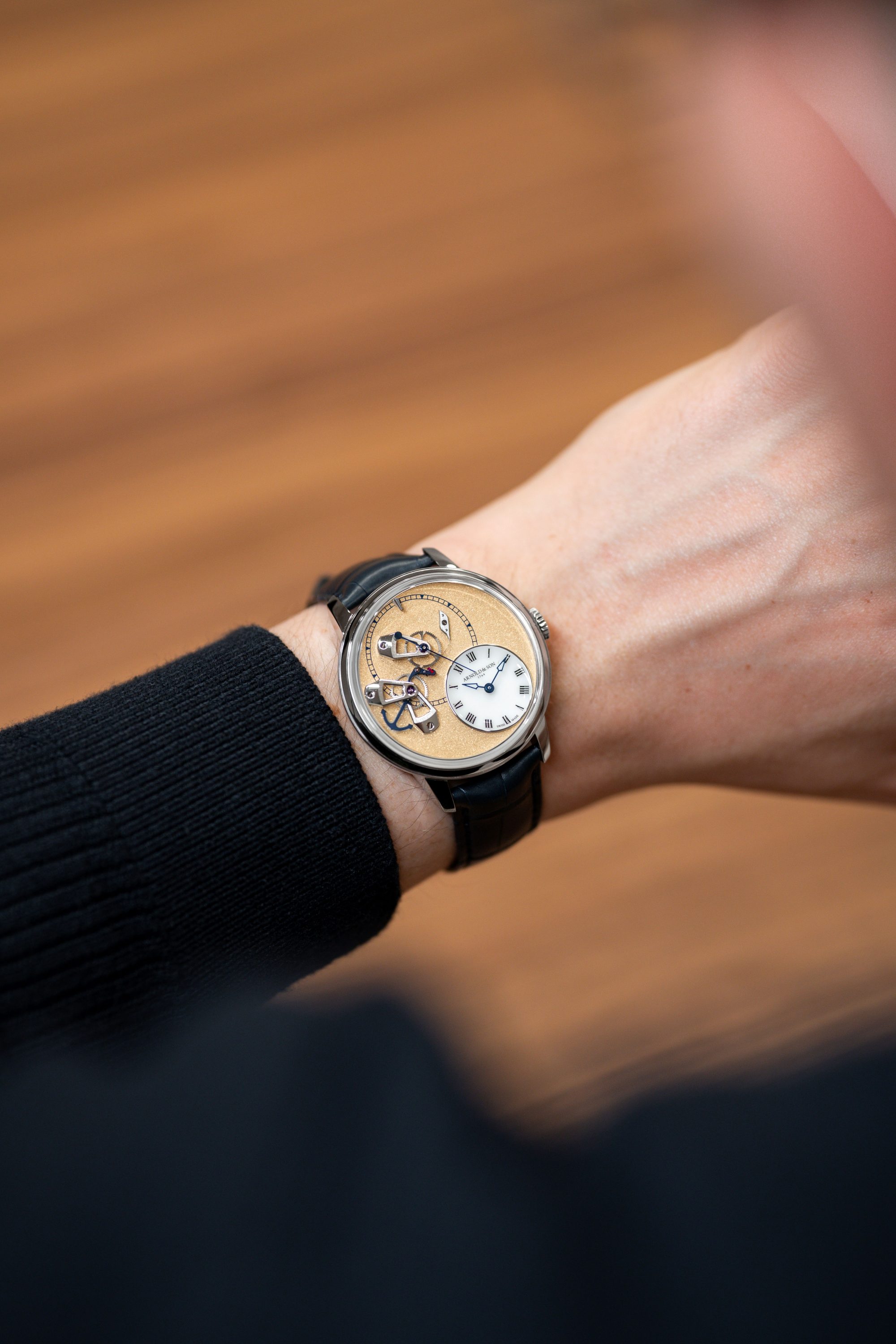
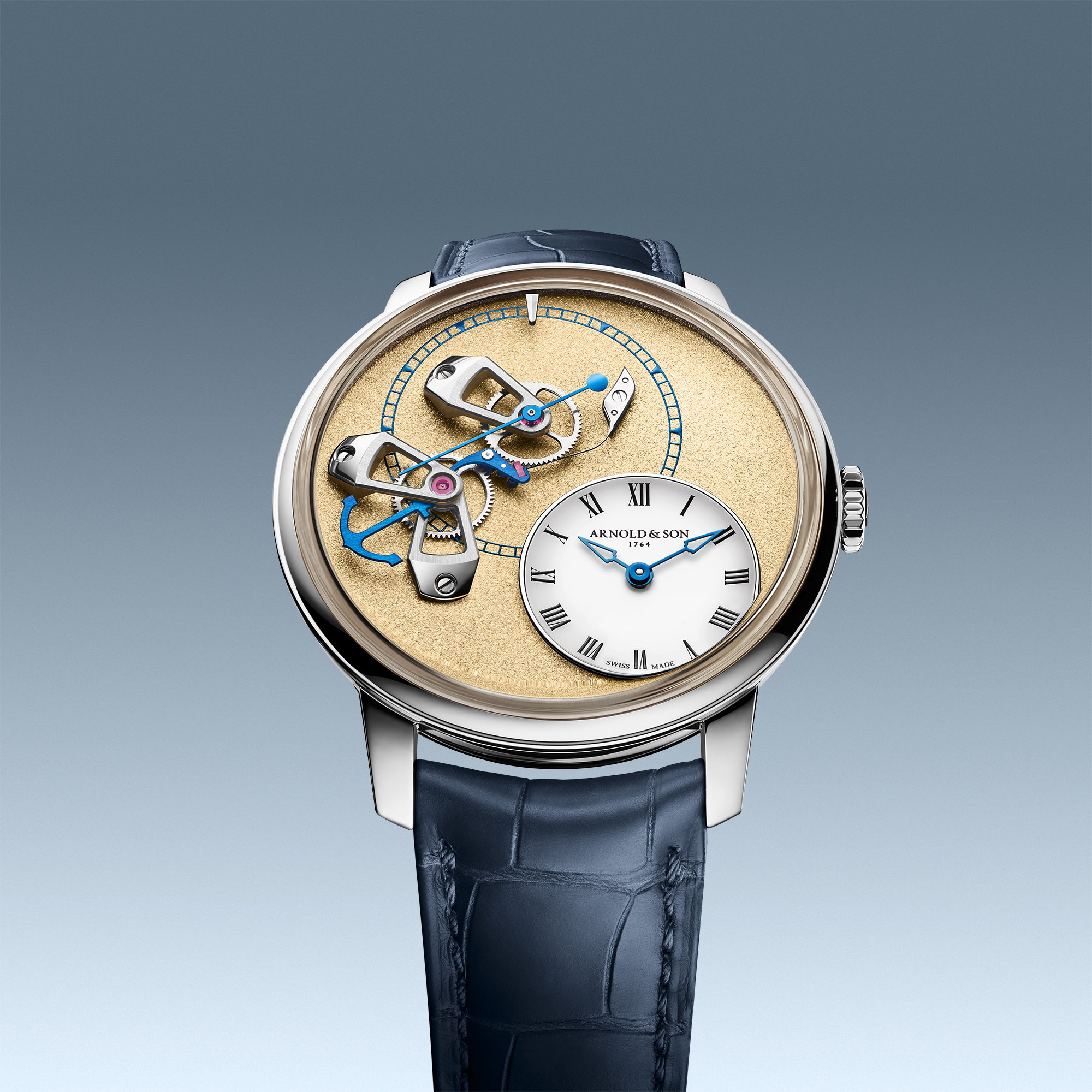
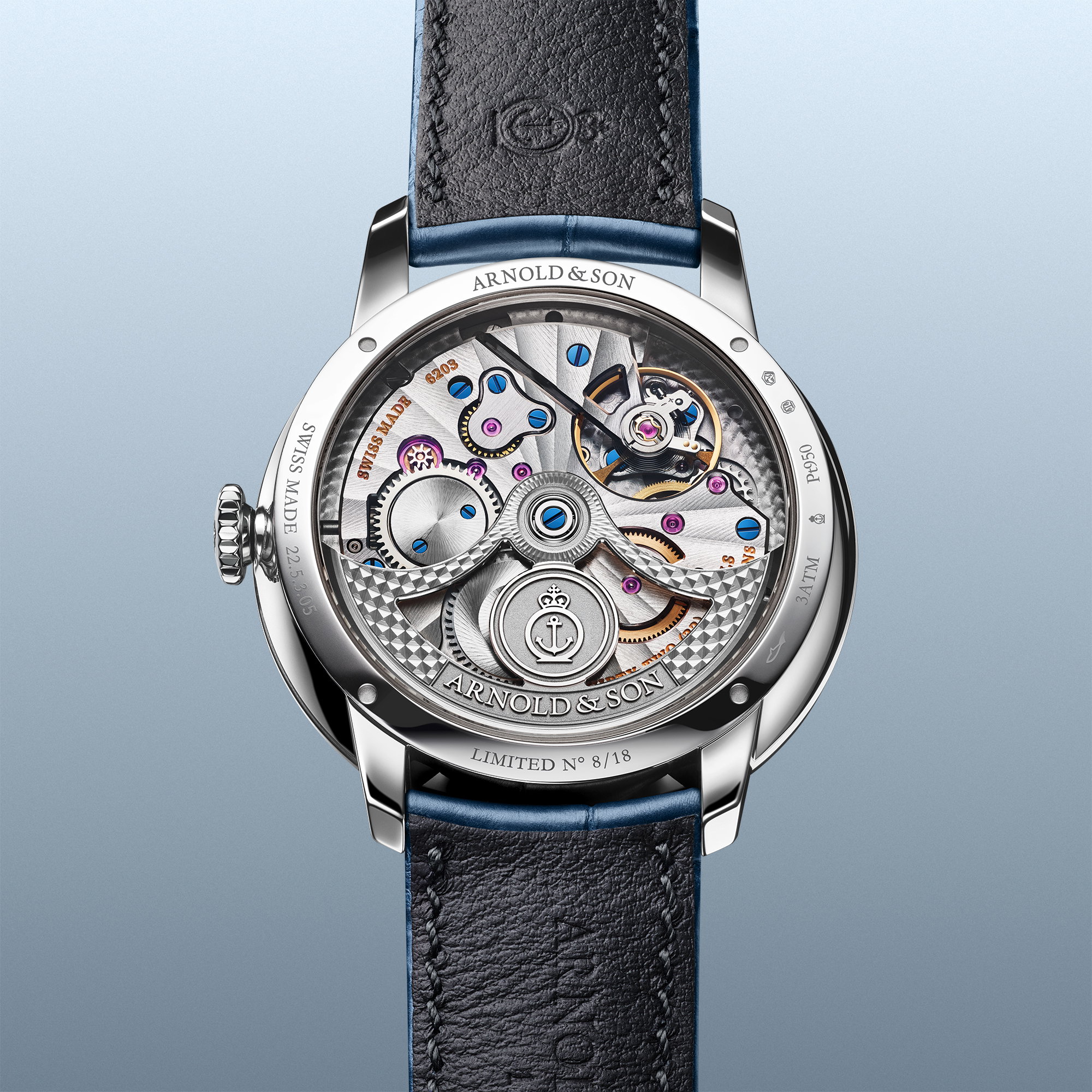


A tribute to marine chronometers
Throughout the history of marine chronometry, accurate timekeeping was not a luxury, but a matter of life and death, particularly for sailors. At sea, precise timekeeping made it possible to determine longitude. A deviation of just one second from Greenwich Mean Time could result in a positional error of 463.8 metres. The DSTB Stop-Seconds pays tribute to these pioneers of the high seas by incorporating an additional stop-seconds mechanism, allowing the seconds hand to be halted and the time set with exceptional accuracy.

the art of setting a chronometer
During the era of great ocean voyages, marine chronometers were designed to keep time with exceptional precision. However, once wound, some could not start on their own. The mechanism had to be set in motion manually. Sailors would therefore set the time in advance, then wait for a precise time signal from Greenwich before starting the chronometer. Once started, it would run continuously throughout the voyage. Rather than regularly correcting the time, navigators would monitor its “daily rate”, meaning the number of seconds it gained or lost each day. For their sextant observations, they used a pocket watch synchronised with the reference chronometer, which remained safely stowed away, protected from shocks and moisture. The chronometer therefore continued to run uninterrupted, while the comparison watch made the reference time available on deck.

Exceptional finishing
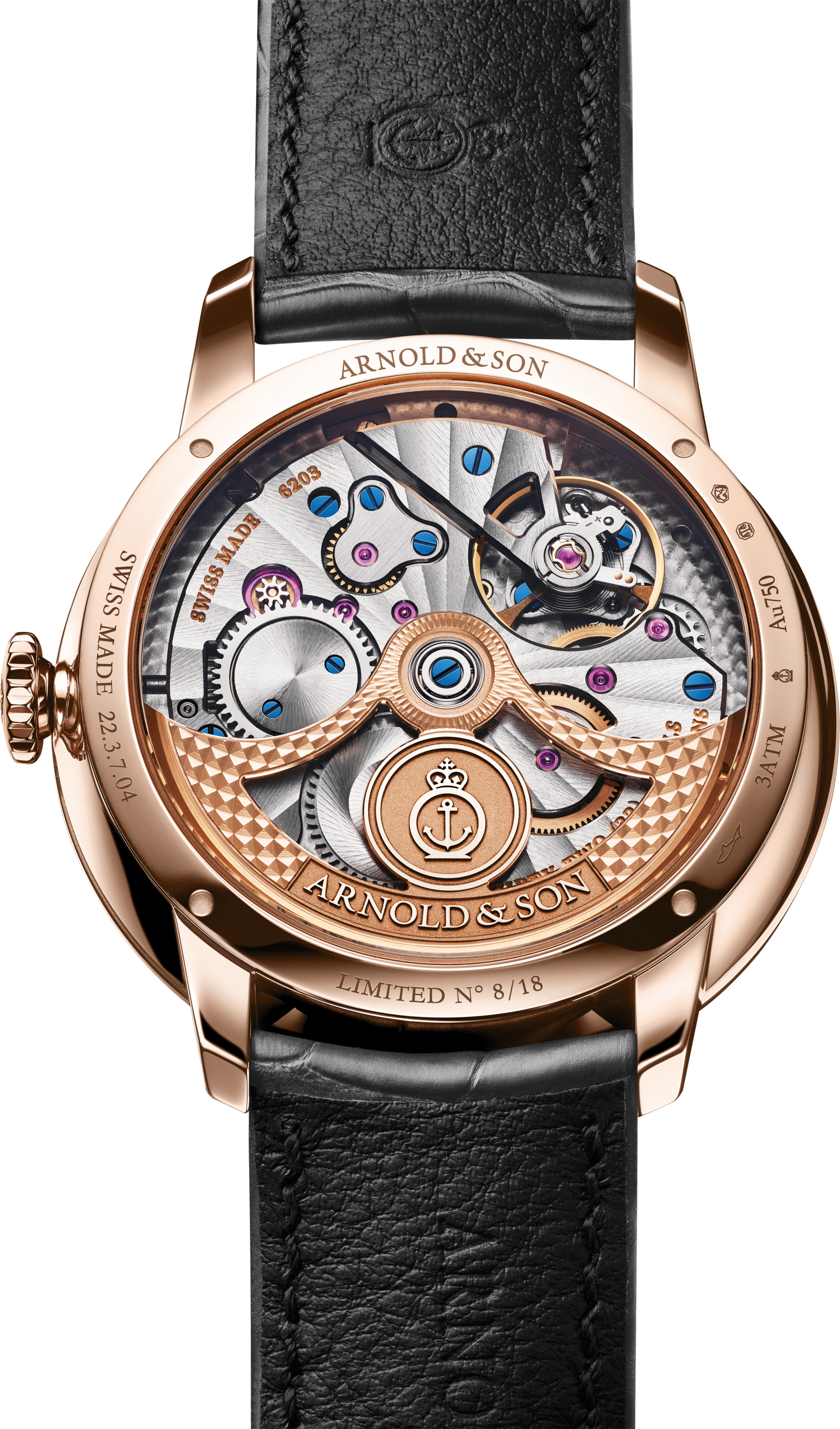
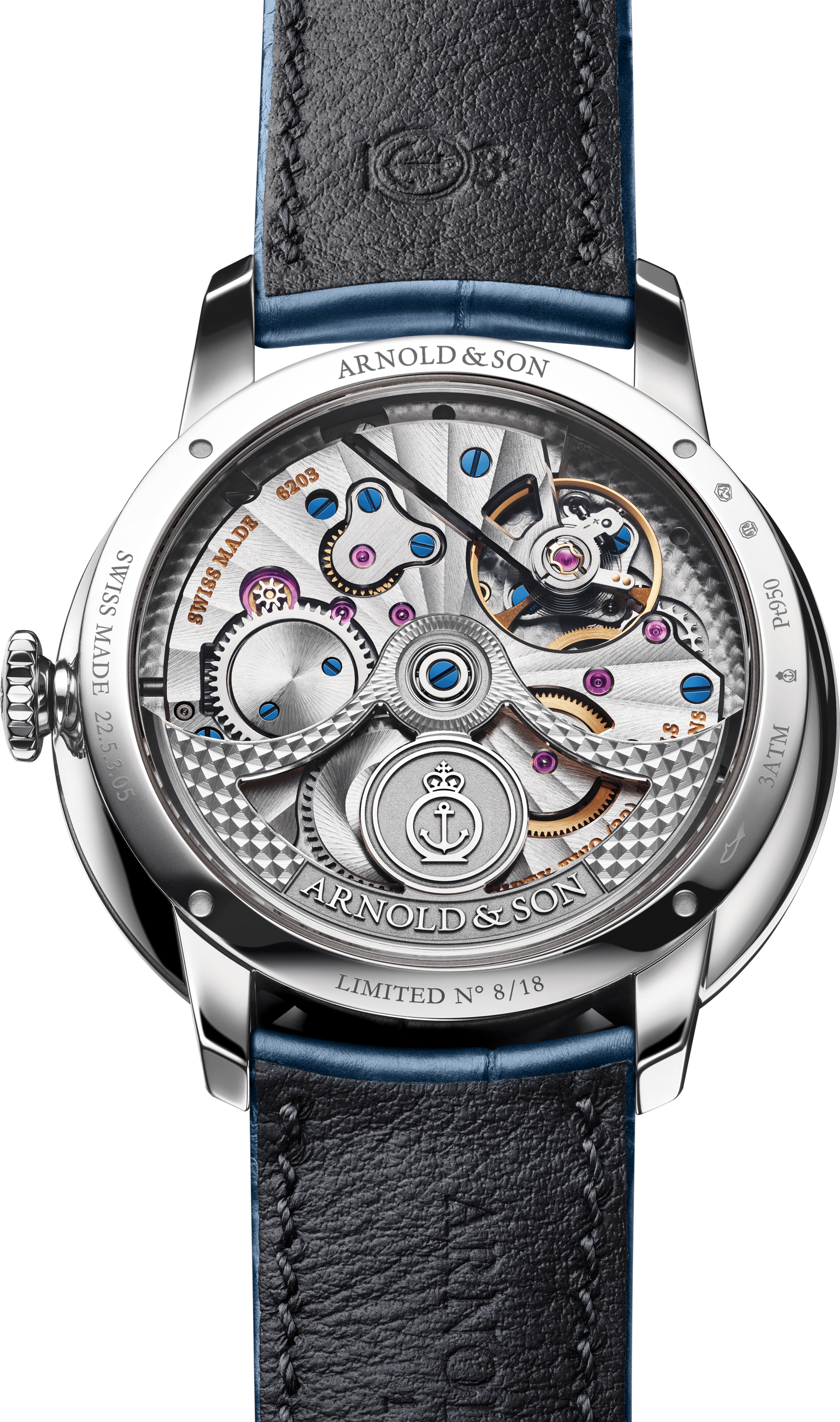
The case backs are fitted with flat sapphire crystals revealing some of the components of the movement, which is entirely developed, machined, assembled and regulated at the Chaux-de-Fonds manufacture. The watches are water-resistant to 3 bar. Also visible is the extensively openworked 22-carat gold oscillating weight, decorated with guilloché and bearing John Arnold’s cherished anchor ex-libris, the emblem of the company.
The opening likewise reveals the traditional finishing applied to the main components of this modern, compact calibre. The bridges, embellished with radial Côtes de Genève, are hand-chamfered, the screws are blued and profiled, the main plate is circular-grained, and the Swiss lever regulating system beats at the now-standard rate of 28,800 vibrations per hour.